AtsIg

Present, better.

Rehearse. Improve. Keep what’s yours.

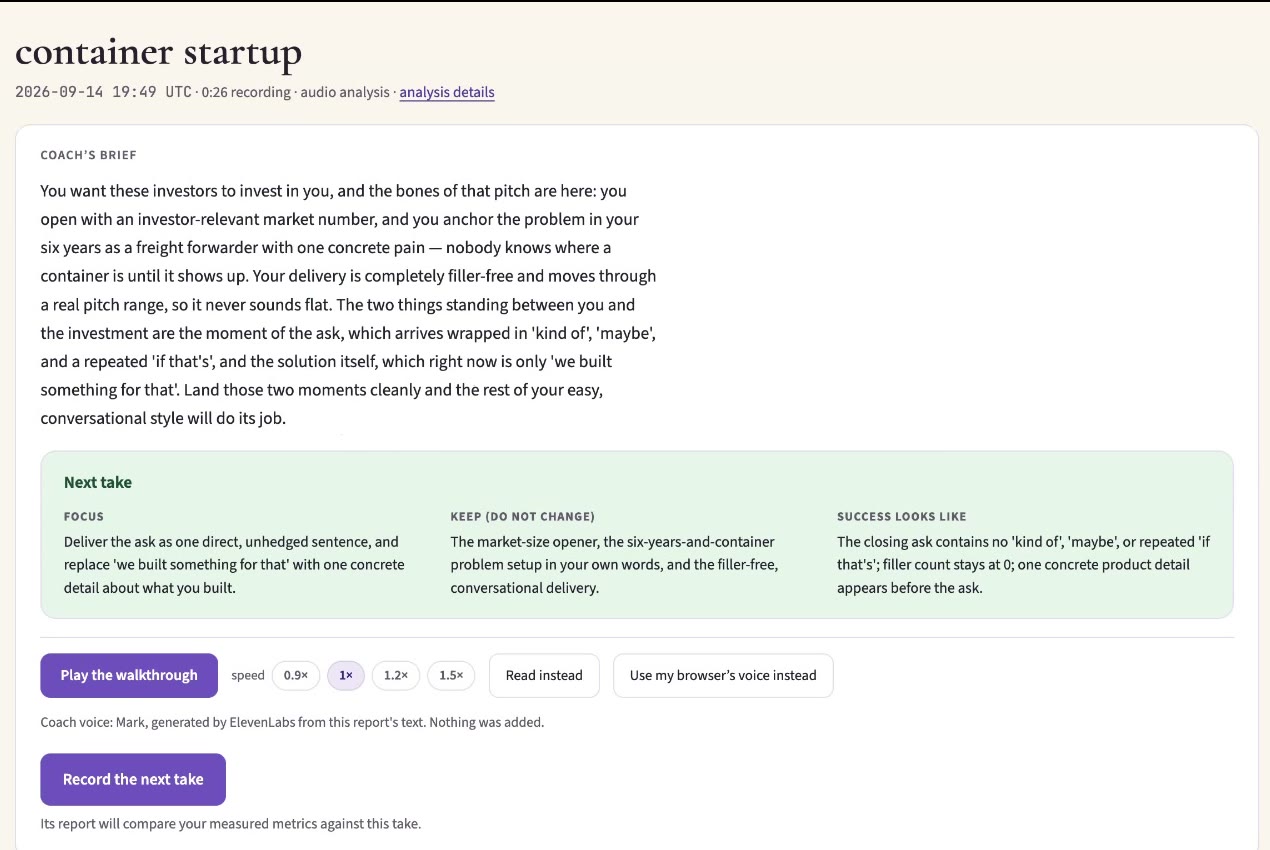
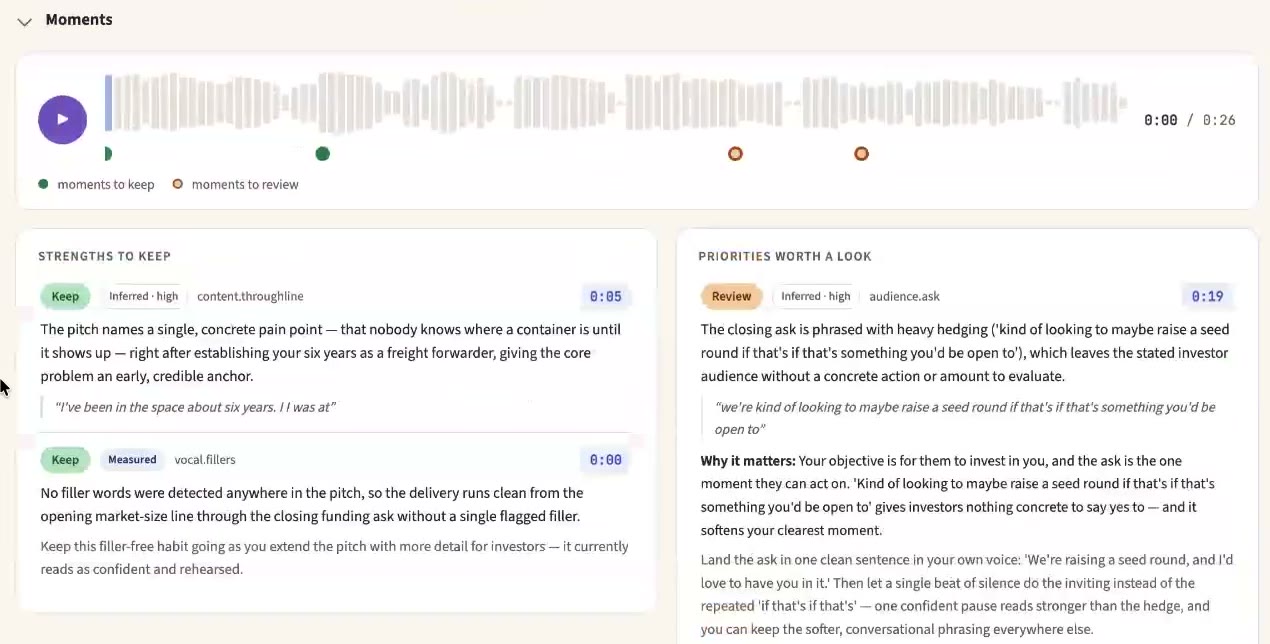
Give your talk once, in private. It comes back marked up second by second: what to keep, what to fix, and the one thing to try on your next take.

A one-time link, no password. New here? How it works.

No talk on the calendar yet?

Join the waitlist

From a sample report · synthetic take

2:14

ReviewPace holds 187 wpm for 40 seconds, right where the numbers need room.

“So um, the way pricing works is, each analysis costs…”

4:02

KeepA deliberate 1.8 s pause before the key message. Your longest, placed exactly right.

Who it’s for

Bring the talk that matters

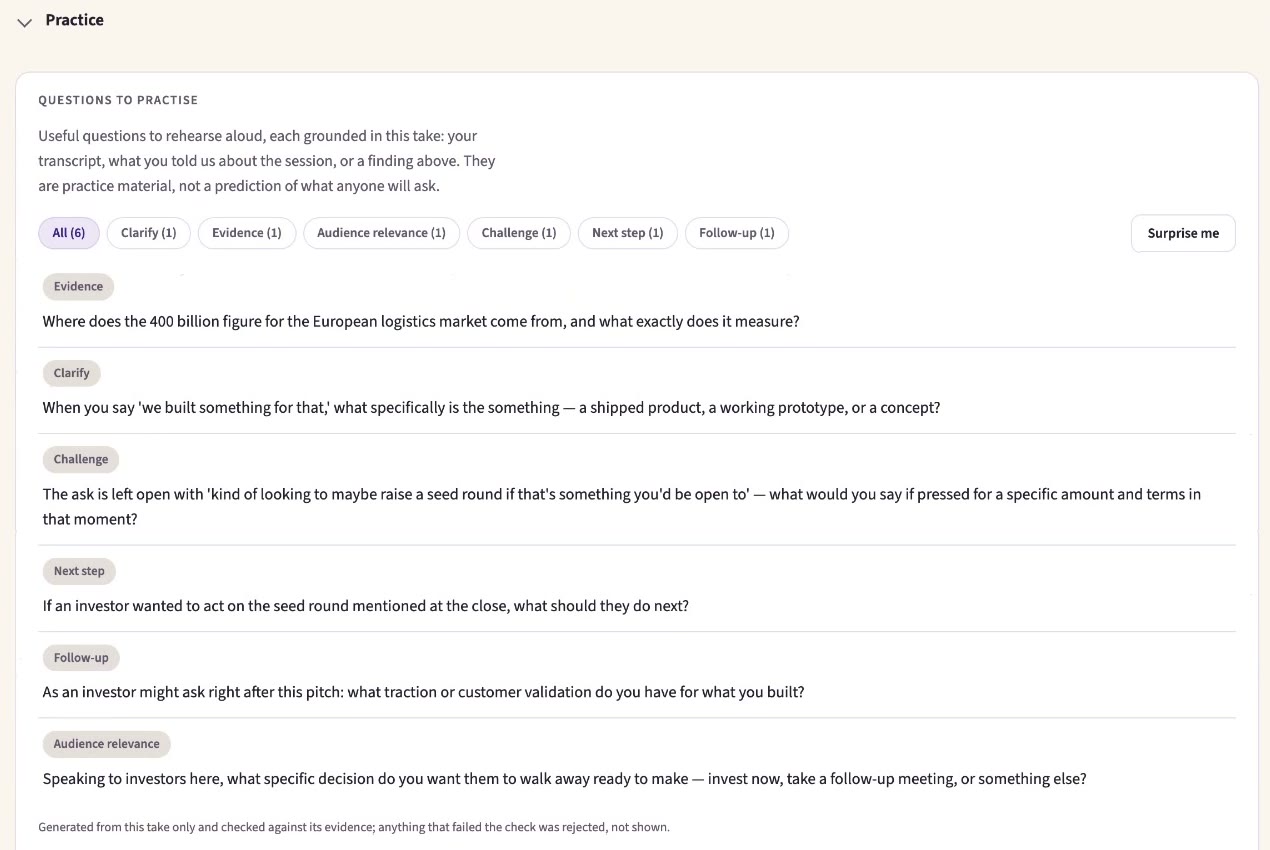
One rehearsal loop, tuned to what you’re actually preparing. Say what the talk is in three answers; the coaching adapts to it.

  • Thesis defenseRehearse the twenty minutes that cap five years of work, without spending your labmates’ goodwill on run-through number four.
  • Conference talkFind out where your key result actually lands in the take, and move it to where you meant it to be.
  • Investor pitchTighten the story and the timing while keeping the voice that makes it yours; the notes never push you toward a template.
  • Interview answersPractice answering out loud with the general speaking rubric; honest labeling, no pretend answer-scoring.
  • Your own situationA toast, a lecture, an oral exam, anything you can describe in a sentence; the report names it exactly as you did.

What you get

The report is the product

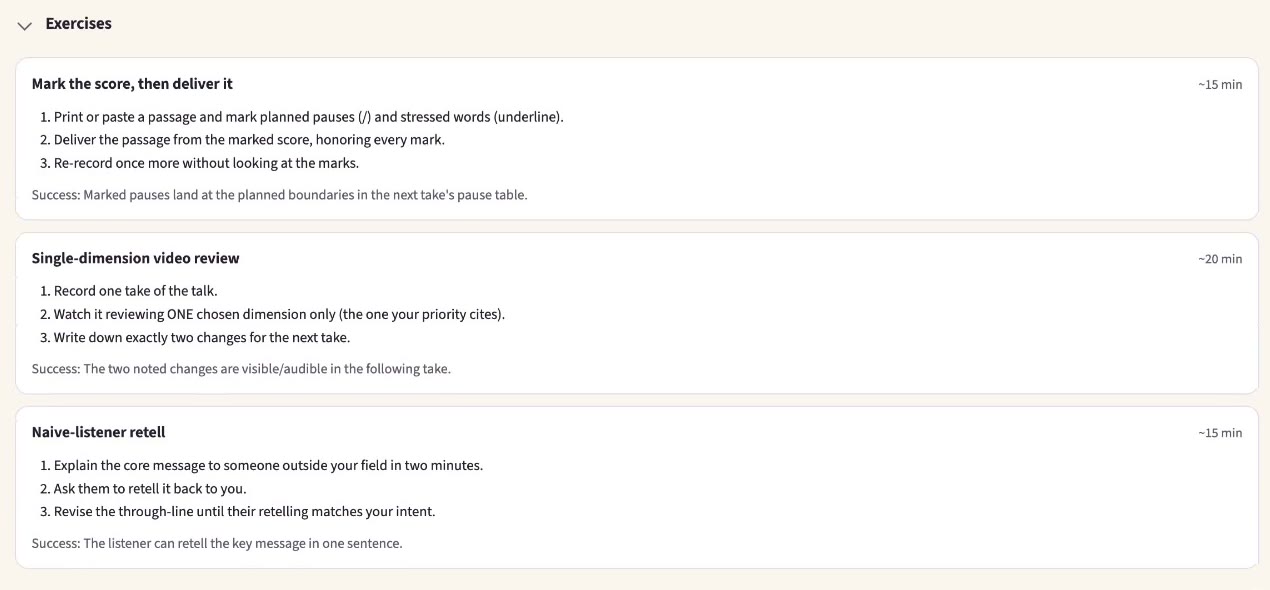
Strengths first, at most three priorities, and a three-line plan for the next take. In the app, clicking any note plays that exact moment of your recording.

From a sample report · synthetic take · defense rehearsal, 12:40

5:12

KeepYour aside “this surprised us too” is doing real work: it resets attention right before the method section. It’s yours; don’t polish it away.

9:47

ReviewThe one-sentence version of your key result first appears here, nine minutes in.

“…so what this actually means is that the effect survives replication…”

Why it matters: your stated aim was for the committee to repeat this sentence. Give it the first two minutes, not minute ten.

Next take: focus

Open with the one-sentence result, then earn it.

Keep

The “surprised us too” aside and your unhurried closing minute.

How you’ll know

Key result stated before 2:00; filler rate steady or lower.

Open the full sample report

Synthetic data, labeled as such. Notes that fail the evidence check are dropped, visibly.

How it works

How a take becomes a better take

rehearse the next takeYour takeone recordingAI agentsContentstructure & messageVocal deliverypace, pauses, pitchEngagementattention & energyAudience fitwho is listeningEvidence gateevery claim must carrya timestamp from your take4:02 verifiedGrounded in theorybooks & courses on presentationand storytelling, evidence-gradedYour reportKeepReviewNext-take planspecific, timestamped,in your own style

The rubrics come from the craft itself: books and courses on presentation skills, graded for evidence. Specialist readers work through your take in parallel: content and structure, vocal delivery, engagement, and, when you say who the talk is for, audience fit. Nothing reaches you without passing the evidence gate, and popular claims that don’t hold up never ship. The report ends in a plan, the plan feeds the next take, and the loop is where you get better.

Measured, not guessed · sample values from a synthetic take

Pace
156wpm
reference 120-170
Fillers
1.9/min
every one timestamped
Pauses
0.6s median
longest ones located
Pitch range
Measured
never a personality score

Reference ranges, never targets. Numbers come from the recording’s audio; anything inferred is labeled as inferred, and nothing scores you as a person.

Audio only, for now

This version analyzes what you said and how it sounded. Nothing visual is processed.

Moments, never you

Notes describe timestamped moments in a recording. They never score or judge you as a speaker.

Consent first, EU-hosted

Nothing runs without per-session consent, and you choose the retention window. The full picture, plainly.

Who builds this

EPFLÉcole PolytechniqueMIT

Built by an engineer trained at EPFL and École Polytechnique, now at MIT.

Those are the schools the founder studied at, not partners or sponsors of this product.

Start

Rehearse the next one

The pilot is free and invite-only while the product earns trust: a small group, real rehearsals, honest limits. New here? How a rehearsal works.

No user counts or testimonials here yet, because none have been measured. When they exist, they’ll come with their methodology.